
What is the 5S Methodology?
Originating in Japan as part of the legendary Toyota Production System (TPS), 5S is a structured, systematic approach to workplace organization and management. The goal is simple: eliminate waste, optimize space, and create a highly predictable, clean environment where problems have nowhere to hide.
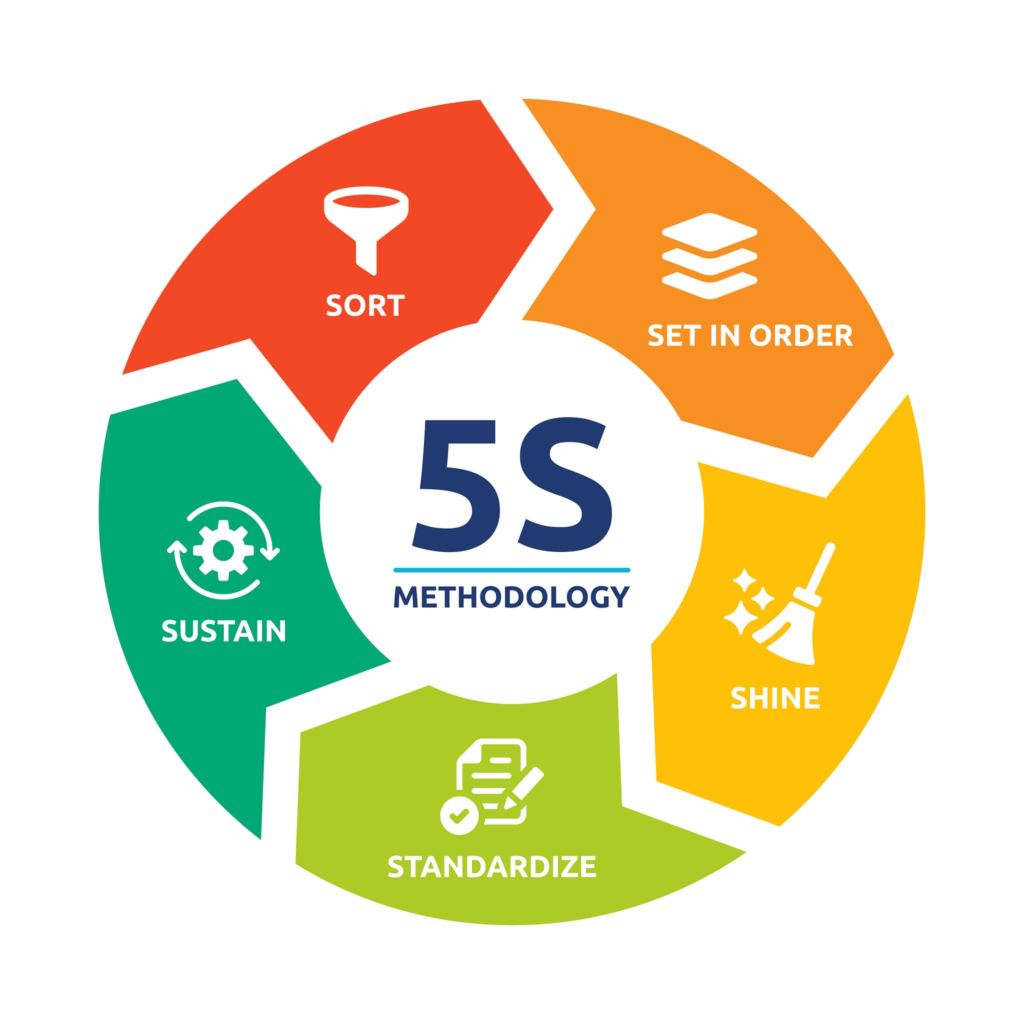
The name comes from five Japanese terms that represent a continuous cycle of improvement: Seiri (整理), Seiton (整頓), Seiso (清掃), Seiketsu (清潔), and Shitsuke (躾).
How 5S Improves Productivity
Many people make the mistake of thinking 5S is just a fancy word for “cleaning up.” It isn’t, the true focus is efficiency and safety.
The ultimate benefit of 5S is its universal adaptability. No matter who you are—from a child to a professional—anyone can successfully use 5S to improve both their personal and work lives as long as it is implemented correctly.
When a workspace is optimized using 5S, productivity climbs because it targets hidden operational wastes:
- Reduces Motion and Time Waste: Instead of hunting for a digital file or a physical tool, everything has a designated home.
- Lowers Cognitive Load: Clutter forces your brain to process extra visual stimuli. A minimalist, ordered workspace frees up mental bandwidth for deep focus.
- Improves Safety: Spills get cleaned instantly, hazards are clearly tagged, and walking paths stay completely clear, dramatically reducing workplace accidents.
How It Works: The Five Pillars
To get the full benefits of 5S, you have to follow the steps in a specific sequence. Skipping straight to organizing without sorting first is a recipe for organizing garbage you don’t even need.
1.Sort (Seiri): Eliminate the unnecessary.
Go through your entire workspace and separate everything into two categories: necessary and unnecessary. Items that are broken, expired, or haven’t been used in months must go. A great tool here is Red-Tagging—if you are unsure about an item, slap a red tag on it and move it to a holding area. If no one claims or uses it within two weeks, dispose of it, donate it, or recycle it.
2.Set in Order (Seiton): A place for everything.
Take the remaining necessary items and give them a permanent home. Arrange them logically based on how frequently you use them. Items you use daily should sit right within arm’s reach; items you use once a month can go in a bottom drawer or closet. Use visual labels, outlines, or shadow boards so anyone can tell exactly where an item belongs at a single glance.
3.Shine (Seiso): Inspect through cleaning.
Clean the workspace top to bottom. Scrub the desks, wipe the screens, and dust the machinery. Crucially, “Shine” is also about inspection. While wiping down a printer or a tool, look for leaks, cracks, loose screws, or fraying wires. Cleaning helps you catch minor technical defects before they turn into costly breakdowns.
4.Standardize (Seiketsu): Create the routine.
The first three steps are easy to do once, but hard to maintain. Standardizing means documenting your new setup. Create simple checklists, take photos of what a “perfectly organized desk” looks like, or set a daily 5-minute alarm at the end of the shift for everyone to return tools to their spots.
5.Sustain (Shitsuke): Build the habit.
This is often the hardest step. Sustaining means building the self-discipline to keep the standards alive over the long haul. It requires regular audits, continuous training, and leadership support. The goal is to weave 5S deeply into your daily routine until it becomes an automatic habit.
How to Apply It Personally
You don’t need to run a manufacturing plant to reap the rewards of 5S. It works wonderfully for personal digital spaces, home offices, or kitchens.
Quick blueprint to apply 5S as an artist student or professional:
- Sort: Lay out all your art supplies. Test every pen, marker, and tube of paint—toss anything that is dried up, frayed, or broken. Gather loose sketchbooks and loose drawings; decide what goes into a permanent portfolio, what gets framed, and what is just scrap paper to be recycled.
- Set in Order: Organize your desk by frequency of use. Place your active sketchbook, primary pencils, and favorite erasers right in front of you. Group your coloring mediums (copic markers, colored pencils, inks) into labeled bins or desktop organizers. Keep reference books on a nearby shelf, not cluttering your drawing surface.
- Shine: Make your workspace inviting. Wipe down your drafting table, blow away eraser shavings, and clean your rulers and stencils to avoid transferring smudge marks to your next clean page. Deep-clean your paintbrushes, organize your supply drawers, and sweep up the charcoal or graphite dust around your stool.
- Standardize: Establish a 5-minute “reset routine” at the end of every drawing session. Put all pencils back in their cups, cap all markers tightly, empty the electric pencil sharpener, and brush off the desktop so you always sit down to a completely blank canvas next time.
- Sustain: Commit to the “one tool out, one tool back” rule. When you switch from a 2B sketching pencil to an inking fine-liner, put the pencil back in its designated spot immediately rather than letting it get buried under paper. Treat your physical tools like a master craftsman—good maintenance ensures they perform perfectly when inspiration strikes.
Quick blueprint to apply 5S to your laptop or computer:
- Sort: Look at your desktop screen. Delete duplicate files, clear out your “Downloads” folder, and uninstall software or apps you haven’t opened in the last 90 days.
- Set in Order: Build a clean folder architecture. Group your folders by project or life domain (e.g.,
Active Projects,Finance,Archive). Pin your top 3 most frequently used applications to your taskbar for one-click access. - Shine: Clean your physical keyboard, mouse, and screen. Then, clear your digital cache, run a malware scan, and empty your trash bin.
- Standardize: Set a calendar event for every Friday afternoon at 4:30 PM. Use those 10 minutes to archive weekly files, clean out your temporary folders, and empty your desktop.
- Sustain: Commit to the rule of “never saving random files directly to the desktop background.” Address clutter the exact moment it happens.
By transforming your chaos into order, you will protect your time, reduce daily background stress, and make your space work for you instead of against you.
Bibliography / Sources
- Lean Sigma Experts Australia. “Organise your space, optimise your work: Lean Six Sigma 5S explained.” https://leansigmaexperts.com.au/organise-your-space-optimise-your-work-lean-six-sigma-5s-explained/
- Womack, J. P., & Jones, D. T. (2003). Lean Thinking: Banish Waste and Create Wealth in Your Corporation. Simon & Schuster.
- Liker, J. K. (2004). The Toyota Way: 14 Management Principles from the World’s Greatest Manufacturer. McGraw-Hill.
